Major organelles: Nucleus Vacuoles and vesicles Lysosomes Cytoskeleton Centrioles Ribosomes Endoplasmic Reticulum Golgi apparatus Chloroplasts Mitochondria Cell wall Cell membrane |
Functions: Contains the DNA Store materials Break down and recycle macromolecules Maintains cellular shape; moves cell parts; helps cells move Organize cell division Synthesize proteins Assemble proteins and lipids Modifies, sorts, and packages proteins and lipids for storage or transport Convert solar energy to chemical energy stored in food (plant cell only) Convert chemical energy in food to usable compounds Shapes, supports, and protects the cell (plant cell only) Regulates materials entering and leaving the cell; protects and supports cell
|
|
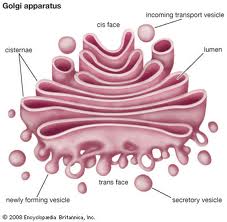
Organelles that build proteins: Three organelles that help build proteins are: Ribosomes, Rough Endoplasmic Reticulum, and the Golgi apparatus. Ribosomes are small particles of RNA and protein found throughout the cytoplasm in all cells. Proteins are assembled on Ribosomes. These ribosomes produce proteins by following coded instructions that come from the DNA. Each ribosome acts as a small machine in a factory, turning out proteins as orders come in from the "boss" or DNA. 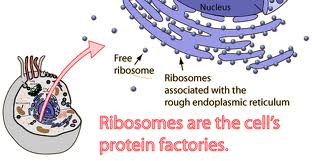 hyperphysics.phy-astr.gsu.edu The rough endoplasmic reticulum is given this name because of the ribosomes found on its surface. The proteins from these ribosomes are inserted into the rough ER, where they may be chemically modified. Proteins that are made on the rough ER include those that will be released from the cell, as well as membrane proteins and proteins destined for lysosomes and other specialized locations within the cell. The ribosomes located on the rough ER produce large amounts of proteins for export, while "free" ribosomes that are not attached to membranes, produce other cellular proteins. 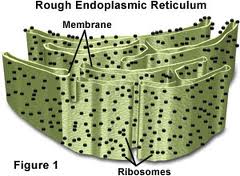 epiehonorsbiology.wikispaces.com The proteins produced in the rough ER then move to the Golgi apparatus. As proteins leave the cell molecular "address tags" are attached that send these proteins to the right destination. These proteins are then "read" by the cell, bundled into tiny vesicles that bud from the ER and are carried to the Golgi apparatus. The Golgi apparatus then modifies, sorts, and packages these proteins and other materials from the ER for storage in the cell or release outside the cell.
 britannica.com |
||
